
How an SGS Shaft Grounding System returned to the factory, was refurbished, and went back into service.
Table of Contents
What does nearly a quarter-century of industrial reliability look like?
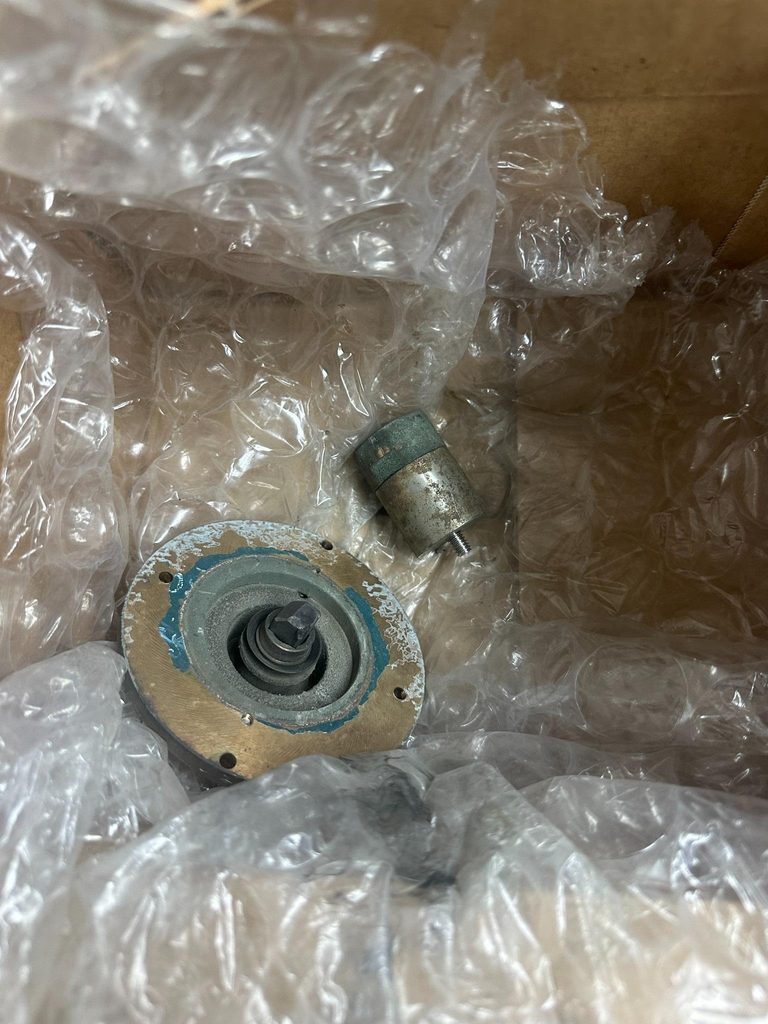
Recently, SGS received a shaft grounding system from a water utility district in Northern California that had been operating in the field for nearly 25 years. The system arrived showing exactly what you would expect from equipment that had spent decades in an industrial environment: oxidation, discoloration, accumulated grime, and visible evidence of long-term service.
But beneath that exterior was something far more important.
The critical components of the shaft grounding system remained fundamentally sound. Most notably, when the system was disassembled, the carbon-brush running surface on the rotor remained remarkably clean and well defined after nearly 25 years of operation.
That single detail helps explain both how the system works and why it has been able to provide such long-term service.
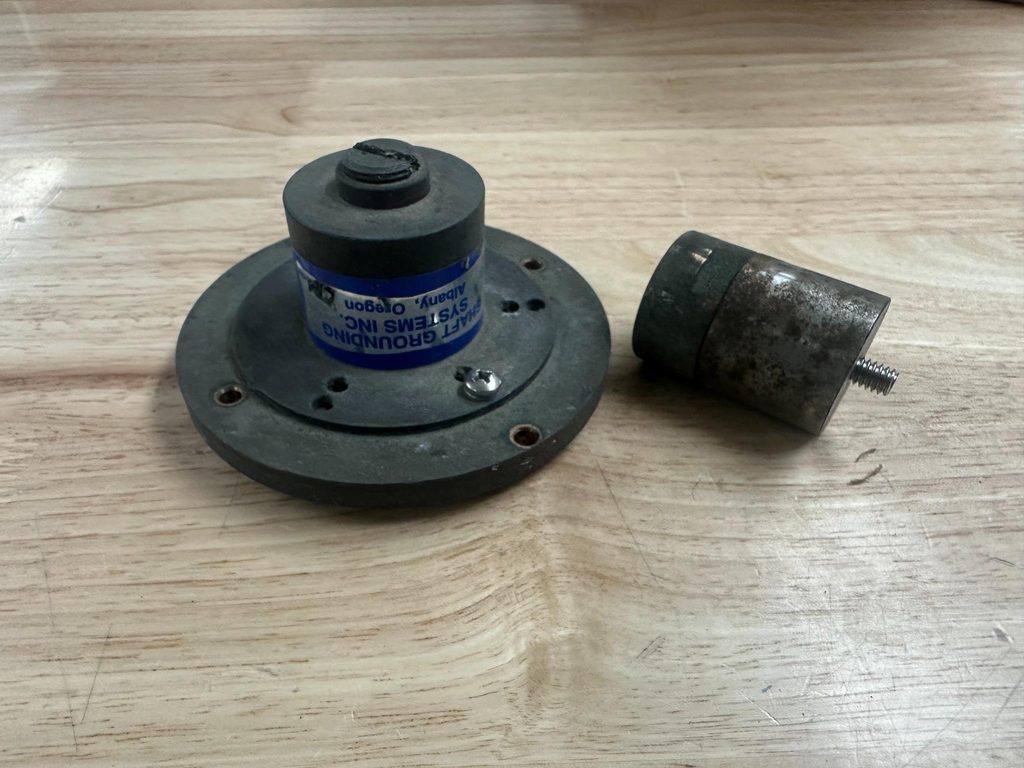
Rather than discard the assembly and replace it with a new system, SGS refurbished the original unit. The wearable components were replaced, reusable components were cleaned and inspected, the assembly was polished and restored, and the completed system was returned to the customer with a full SGS factory warranty.
Nearly 25 years in service. Refurbished instead of discarded. Factory warranted. Ready to go back to work.
Protecting the Bearing by Giving Current a Better Path
Electrically induced motor bearing damage is fundamentally an electrical-path problem.
Variable frequency drives and other electronic drives can create shaft-to-frame electrical potential. If that potential becomes high enough to overcome the dielectric strength of the lubricant separating the bearing’s rolling elements and races, current can discharge through the bearing.
Those repeated electrical discharges can create microscopic damage to the bearing surfaces. Over time, the result may appear as frosting, pitting, fluting, increased vibration, noise, and ultimately premature bearing failure.
The solution is conceptually simple: give the electrical current a safer and more attractive route from the rotating shaft back to the motor frame.
SGS shaft grounding systems are designed to provide a continuous, very low-impedance pathway around the bearing so destructive shaft current is diverted through the grounding system instead of discharging through the bearing.
The challenge is not merely creating that electrical path when a grounding system is new. The real engineering challenge is maintaining it for years in an operating industrial environment.
The Most Important Photograph: The Rotor Running Surface
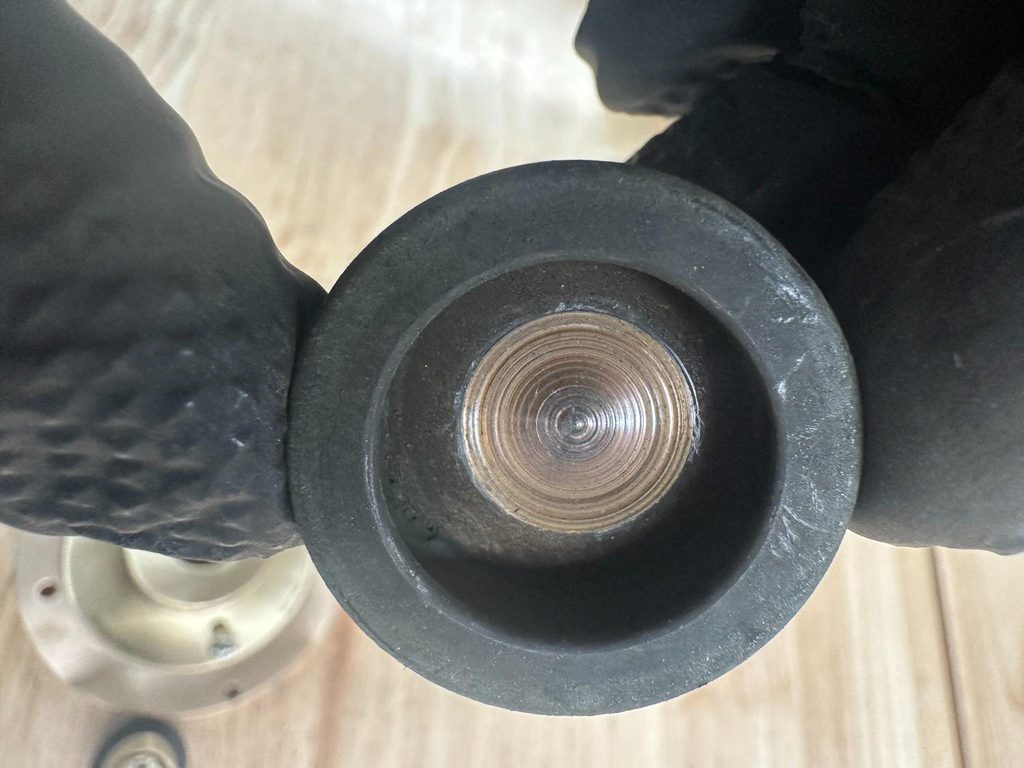
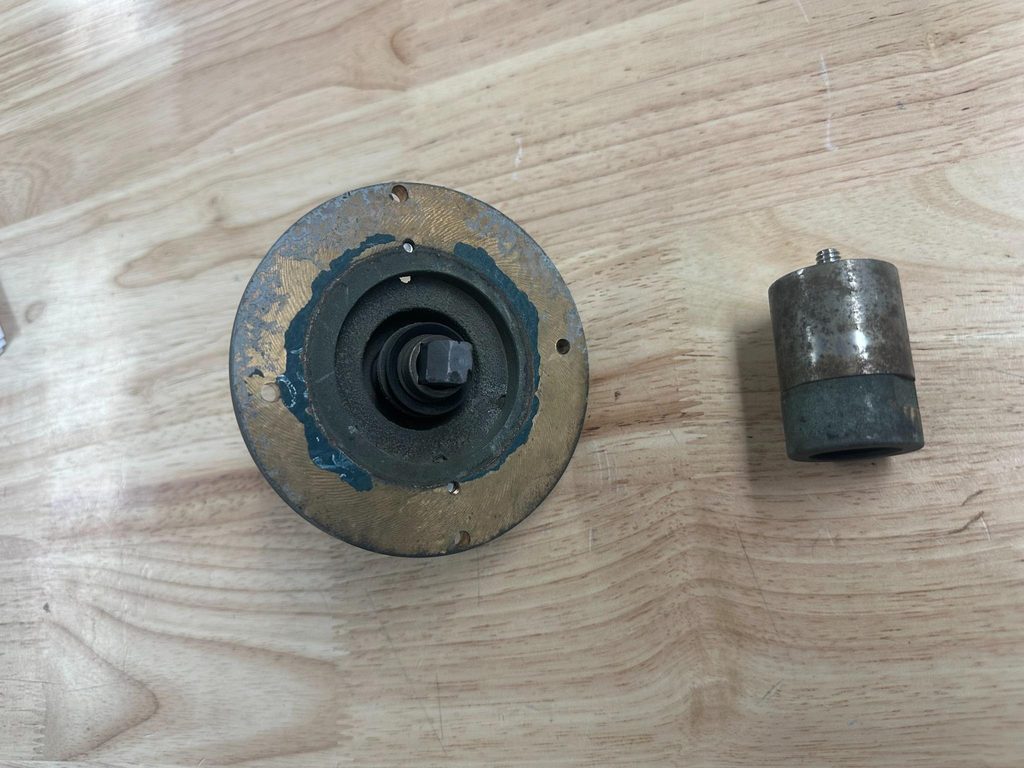
Of all the photographs taken during this refurbishment, the close-up of the rotor may be the most significant.
At the center of the image is the circular metallic surface on which the carbon brush has been running. Concentric contact marks are visible, clearly showing the area where the brush and rotor have interacted through millions upon millions of shaft revolutions.
Yet after nearly 25 years, that surface is still strikingly clean.
That is not simply an interesting wear pattern. It is the electrical heart of the shaft grounding system.
For a shaft grounding system to protect a bearing, the brush-to-rotor interface must continuously provide a conductive path that competes successfully with the bearing as the path of least resistance.
If corrosion, oil, dirt, oxidation, brush debris, or other contaminants are allowed to build up between the grounding brush and its running surface, electrical resistance can increase. If the grounding route becomes sufficiently compromised, current may again seek another path – and the motor bearing can become that path.
The photograph demonstrates something very different. Despite decades in service, the actual brush-contact area remains clearly defined and clean, illustrating the fundamental SGS design philosophy: protect the critical electrical interface and engineer the brush and running surface to work together over the long term.
The Brush and Rotor Wear Together – By Design
One of the key features of the SGS approach is that the carbon brush is not simply treated as an isolated wear component. The brush and the material it rides against are engineered as a system.
The brush and rotor are selected to wear slowly in concert with one another. That controlled relationship continually exposes and maintains a clean conductive interface while keeping the grounding path electrically favorable.
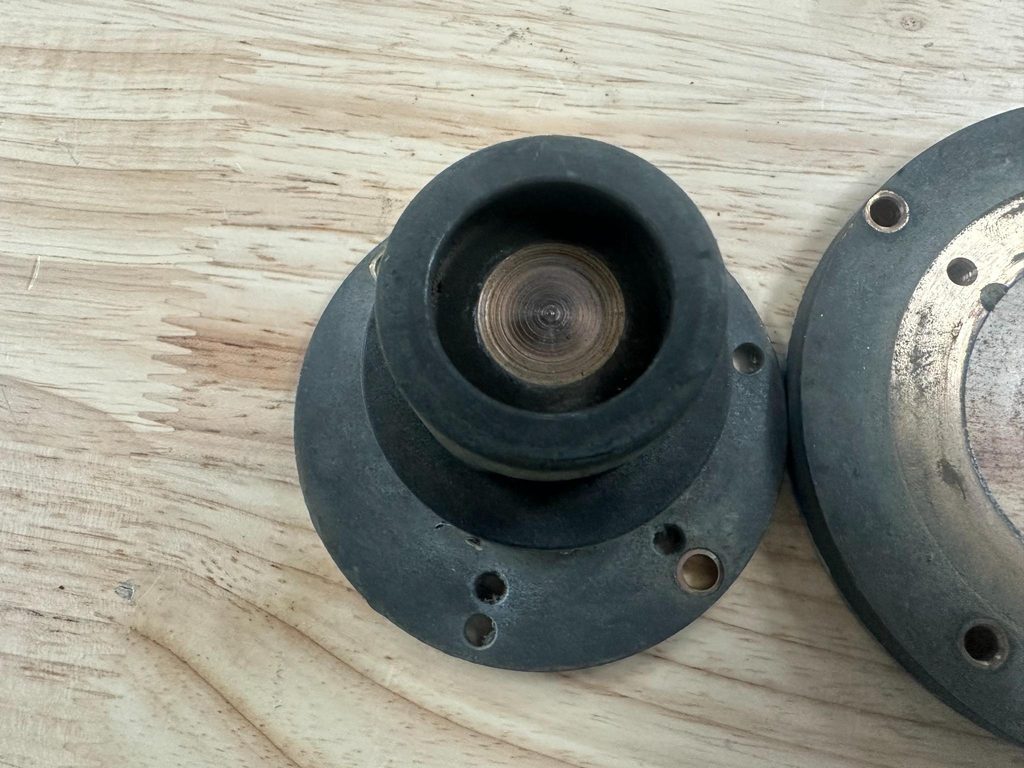
The rotor in this nearly 25-year-old system provides a compelling visual demonstration of that concept. There is wear – as there should be whenever two components are intentionally operating in contact – but it is controlled wear.
The circular contact pattern shows where the brush has ridden on the rotor, while the clean surface illustrates how the relationship between the materials has helped maintain electrical contact over an extraordinarily long period of time.
The goal is not to prevent all wear. The goal is to make the wear predictable, slow, and supportive of the electrical interface.
Sealing the Critical Electrical Interface From the Environment
The other major reason the rotor photograph is so significant is that the brush-to-rotor relationship operates within a sealed environment.
Industrial motors rarely live in ideal conditions. Water utilities and other process facilities can expose motors to moisture, airborne dirt, dust, grease, oils, corrosion, and numerous other contaminants.
A grounding technology that depends on maintaining direct electrical contact must be capable of functioning in that environment year after year. By sealing the brush-to-rotor interface from the surrounding environment, SGS protects the running surface from contaminants that could otherwise increase resistance or interrupt the preferred current path.
The returned system makes the benefit visually obvious: the exterior looked like equipment that had spent decades in industrial service, while the critical internal running surface remained notably clean.
That contrast may be the strongest evidence in the entire refurbishment. The external condition shows the environment the equipment experienced. The clean rotor surface shows what the sealed SGS design kept away from the electrical interface.
Why the End-of-Shaft Design Reduces Wear
On an SGS non-drive-end system, the brush operates against a dedicated rotor mounted at the end of the motor shaft. The brush therefore runs in the axial plane rather than traveling continuously around the full outside diameter of the motor shaft.
That geometry greatly reduces the distance the brush must travel during every revolution. Less cumulative sliding distance contributes directly to slower brush wear.
A protected running surface, carefully matched proprietary materials, controlled contact pressure, reduced brush travel, and a sealed environment all work together to preserve a clean, continuous, low-impedance electrical pathway.
The returned system provides a real-world demonstration of what that looks like after decades rather than months.
From Field-Worn to Factory Refurbished
When the system first arrived at SGS, its appearance reflected its age. The exterior metal surfaces showed oxidation and discoloration. The housing and mounting components showed evidence of years of operation, and the wearable components had accumulated the effects of long-term service.
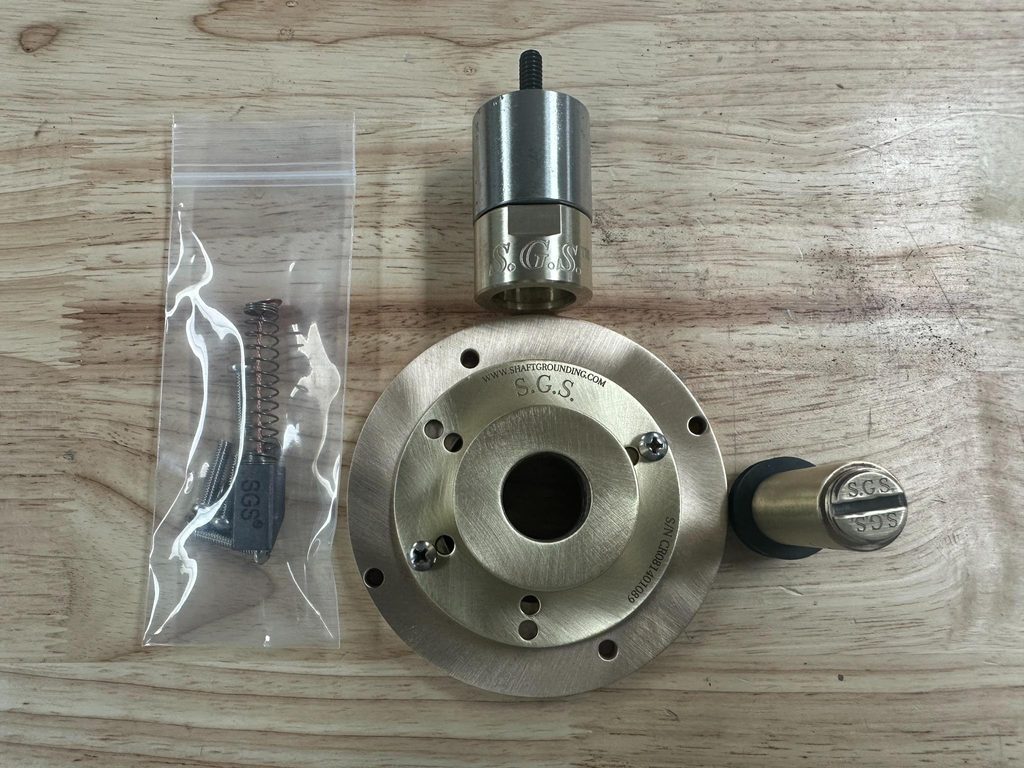
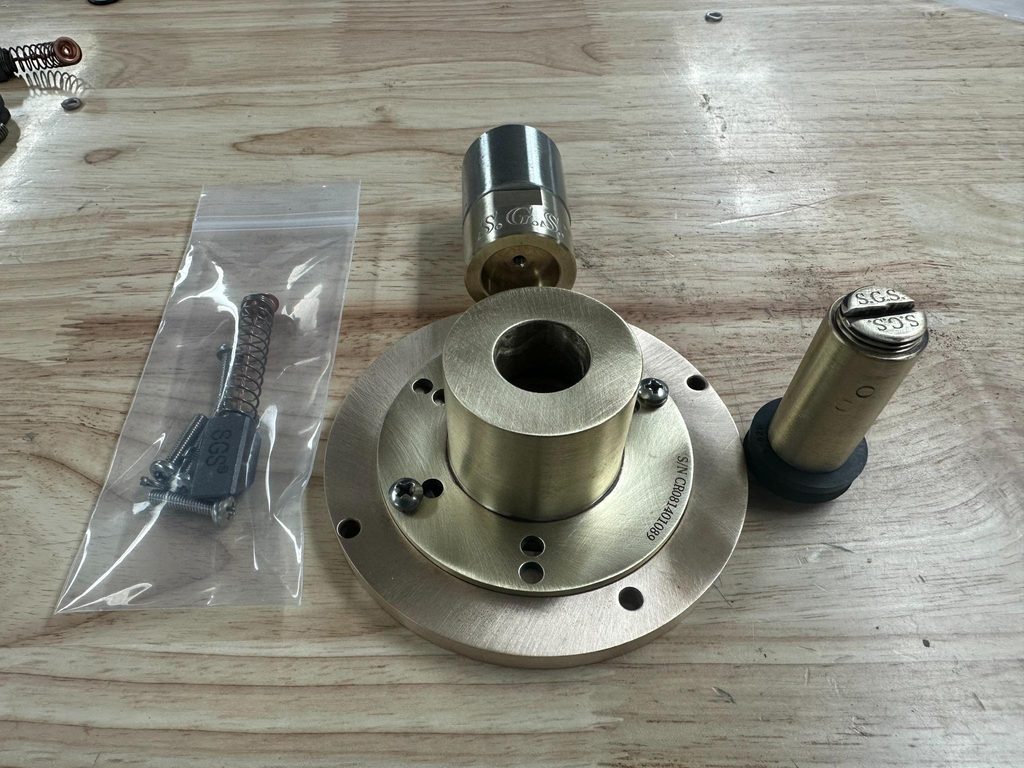
The system was disassembled and evaluated. The wearable components were replaced. The reusable structural components were cleaned and restored. Surfaces were polished, hardware was renewed as appropriate, and the system was reassembled.
The difference between the incoming and completed assemblies is dramatic. But this was not simply a cosmetic restoration. The purpose was to return a proven piece of industrial equipment to useful operating condition.
Particularly significant was the condition of the rotor. Although the exterior clearly reflected decades in the field, the sealed brush-to-rotor interface told a very different story. Its contact surface remained clean and well defined – exactly what is needed to support the continuous low-impedance path that allows shaft current to flow around the bearing rather than through it.
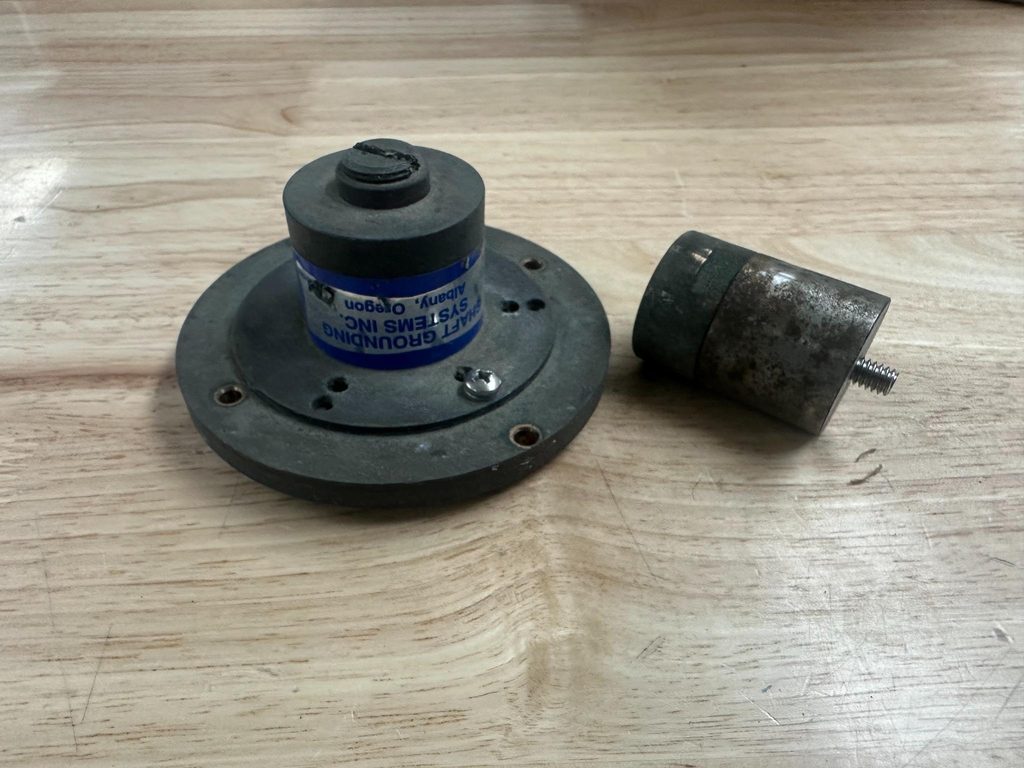
Before: the system as received after decades of service.
Refurbished – Not Merely Cleaned
There is an important distinction between cleaning an old industrial component and factory refurbishing it.
Cleaning makes something look better. Refurbishment restores its function.
In this case, the customer’s system was not polished simply because an old grounding system looks better when it shines. The assembly was disassembled, wearable elements were replaced, reusable components were restored, and the device was prepared for continued operation.
Following refurbishment, the completed system was shipped back to the Northern California water utility district with a full SGS factory warranty.
For critical infrastructure, that matters. A water utility does not purchase motor-protection equipment because it is visually impressive. It purchases it because pumps and motors have to operate reliably.
Durability Is Sustainability
Sustainability in industrial equipment is often discussed in terms of new materials, manufacturing processes, and recycling programs. There is another form of sustainability that is much simpler: build equipment worth keeping.
Every industrial product has embodied material, machining, transportation, labor, and energy associated with manufacturing it.
If a major component can operate for decades and later be refurbished by replacing its relatively small wearable elements rather than replacing the entire assembly, significantly more useful life can be extracted from the original manufactured product.
In this case, an approximately 25-year-old grounding system did not become scrap. Its serviceable components remained valuable. Its wear components were replaced. And the finished system was sent back to its owner.
That is sustainability through durability.
Designed for Industries Where Reliability Matters
SGS shaft grounding systems grew out of environments where unexpected downtime was costly and equipment had to survive demanding 24/7 industrial conditions. SGS systems are used in applications including but not limited to water utilities, data centers, mining operations, nuclear power plants, semiconductor facilities, hospitals, paper mills, airports, universities, and food-processing operations.
Those facilities have very different processes, but they share one concern: critical rotating equipment needs to keep running.
The Northern California system is especially compelling because it turns those design principles into something tangible. You can see the exterior after decades in the field. You can see the original system disassembled. You can see the rotor surface on which the carbon brush operated. And you can see the final refurbished assembly.
Nearly 25 Years Is More Than a Product Claim
Specifications are important. Engineering drawings are important. Laboratory testing is important. But there is a different kind of credibility that comes from receiving a piece of industrial equipment that has actually been operating for nearly a quarter-century.
This SGS shaft grounding system arrived looking its age. Then it was opened.
Inside was a clean, established carbon-brush running surface that had continued to perform its most important function: helping provide the motor shaft with a dependable electrical pathway around the bearing.
That is the story these photographs tell. Not that a piece of metal lasted for 25 years. Not that an old product could be polished until it looked new. But that the fundamental SGS design – a protected running surface, matched brush-and-rotor wear characteristics, reduced wear geometry, and a continuous low-impedance electrical path – was still serviceable decades after installation.
The wearable components were replaced. The system was refurbished. A full SGS factory warranty was applied. And nearly 25 years after it first entered service, the grounding system was shipped back to the Northern California water utility district to continue protecting its equipment.
Nearly a quarter-century in the field. Refurbished instead of discarded. Factory-warranted. And ready to go back to work.
Technical reference
Additional information on SGS shaft grounding technology, electrically induced bearing damage, and current SGS product designs is available at www.shaftgrounding.com